Smart TVs and streaming platforms – like Google TV, tvOS, Roku, webOS, and Tizen – offer developers a growing audience, but traditional monetization methods such as ads and subscriptions can be intrusive or limiting. In this article, we’ll explore how to monetize your Smart TV app effectively and ethically using Infatica SDK, a lightweight solution that generates passive revenue while keeping your app ad-free and user-friendly.
Why Monetizing Smart TVs Is Different
Smart TV apps and streaming platforms present a unique environment for monetization. Unlike mobile or desktop apps, users typically engage passively, often watching content from a distance or sharing devices with family members. This makes traditional monetization methods – like banner ads, video interruptions, or paid subscriptions – less effective and sometimes even disruptive to the user experience.
Ads on Smart TVs can frustrate viewers when they interrupt shows or appear too frequently. Subscription models may limit growth if users are unwilling to pay upfront. As a result, developers face a challenge: how to generate revenue without compromising engagement, retention, or the overall experience.
This is where alternative monetization methods, such as peer-to-business (P2B) networks, come in. By leveraging the traffic your app already generates, you can earn revenue even when users aren’t actively interacting with your app. Smart TV monetization requires a solution that is seamless, ethical, and minimally intrusive – ensuring users continue enjoying your app while you unlock new income streams.
| Platform | OS / Environment | Key Features | Monetization Considerations | Market Notes |
|---|---|---|---|---|
| Google TV / Android TV | Android-based | Access to Google Play, wide app support, Chromecast integration | Supports in-app purchases, ads, subscriptions; Infatica SDK can add passive revenue | Large global user base, highly customizable |
| tvOS (Apple TV) | Proprietary (iOS-based) | Seamless integration with Apple ecosystem, App Store access | Subscriptions dominate; limited ad options; Infatica SDK provides alternative revenue | High-paying audience, premium content focus |
| Roku | Proprietary OS | Simple UI, streaming channel store, large device penetration | Ads common; subscription revenue possible; Infatica SDK works across channels | Very popular in North America, user engagement is high |
| webOS (LG Smart TVs) | Linux-based | LG app store, voice control, multi-screen casting | Limited ad formats; monetization options often underused; Infatica SDK adds passive revenue | Popular in Europe and Asia, strong in smart home integration |
| Tizen (Samsung Smart TVs) | Linux-based | Samsung app store, Bixby voice assistant, Smart Hub | Ad-supported apps common; subscriptions used; SDK enables background revenue | Largest Smart TV market share worldwide, many older devices still active |
Introducing Infatica SDK
Infatica SDK offers a modern, user-friendly solution for monetizing Smart TV and streaming apps without disrupting the user experience. Instead of relying on ads or subscriptions, the SDK connects your app’s users to Infatica’s peer-to-business (P2B) network, generating revenue from the traffic your app already produces.
All of this happens ethically, securely, and with full user consent. The Infatica SDK works silently in the background, enabling developers to generate passive revenue while keeping apps ad-free and subscription-free – enhancing user satisfaction and loyalty.
With Infatica SDK, monetization becomes a natural extension of your app, not a distraction from it. Developers can unlock new revenue streams instantly, maintain a lightweight app footprint, and focus on delivering an exceptional user experience.
Benefits of Monetizing with Infatica SDK
Integrating Infatica SDK into your Smart TV or streaming app offers a range of advantages that go beyond traditional monetization methods. Here’s why developers are choosing Infatica to unlock new revenue streams:
Additional Revenue
Infatica SDK works alongside any existing monetization strategy. Whether your app already uses ads, subscriptions, or in-app purchases, the SDK generates extra income without interfering with your current setup.
Instant Monetization
Revenue is earned even when users aren’t actively interacting with your app. The SDK operates in the background, allowing you to monetize traffic generated passively, providing a steady and reliable income stream.
Better User Experience
Users prefer apps that are ad-free and subscription-free. By using Infatica SDK, you avoid intrusive ads and keep your app accessible to a wider audience, creating a smoother and more enjoyable experience.
Increased User Loyalty
Offering your app without interruptions or paywalls helps maintain high retention rates. Users stay engaged longer and are more likely to return, building trust and loyalty over time.
Transparent and Ethical Terms
All rules and conditions are clear and strictly followed. Infatica SDK is fully consent-based and GDPR-compliant, ensuring your users’ privacy and autonomy are respected.
Lightweight and Efficient
The SDK is designed to have minimal impact on app size or performance. Integration is seamless, and your app continues running smoothly without added complexity.
Tangible Earnings Potential
Infatica pays up to $0.60 per active user per month, turning every engaged user into a source of revenue. For larger user bases, this can translate into significant passive income without extra effort.
By combining ethical monetization with minimal disruption and real revenue potential, Infatica SDK allows developers to focus on what matters most: creating outstanding apps and happy users.
Security, Privacy, and Compliance
When it comes to monetizing apps, security and privacy are just as important as revenue. Infatica SDK is built with ethical, secure, and fully compliant practices, ensuring that both developers and users can trust the platform.
Ethical and Consent-Based Network
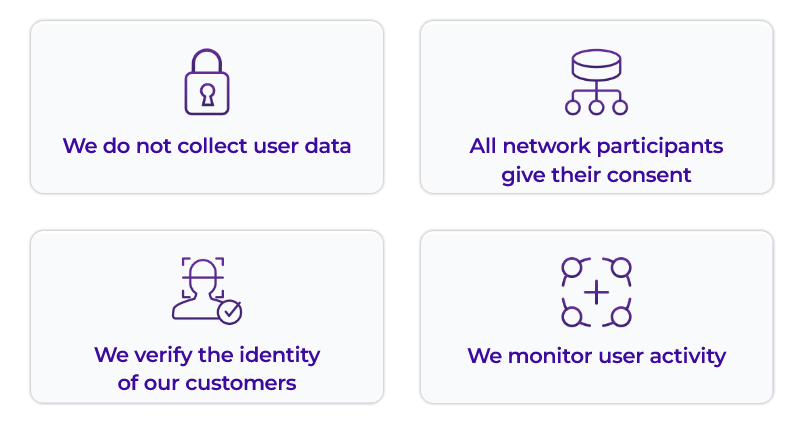
Infatica operates a peer-to-business (P2B) network where all participants join voluntarily. Every user’s participation is fully consented, and no personal data is collected. This transparent approach ensures that monetization is ethical and respects user autonomy.
GDPR Compliance
Infatica SDK is fully GDPR-compliant, meaning your users’ privacy is protected in accordance with European data regulations. All traffic is anonymized, and only necessary technical data (like IP addresses) is used for monetization.
Strong Security Partnerships
To keep users safe, Infatica partners with Bitdefender, a global leader in cybersecurity. Together, we protect users against fraudulent websites, phishing attempts, and unsafe web pages. This proactive approach ensures that your app remains secure while generating revenue in the background.
Rigorous Monitoring and Verification
Infatica verifies the identity of all network participants and monitors activity to maintain a safe and trustworthy environment. This minimizes the risk of misuse while safeguarding your app’s reputation.
Certifications and Standards
The SDK meets multiple international standards for security, privacy, and service management:
- ISO/IEC 27001:2022 – Information security management
- ISO/IEC 27701:2019 – Privacy information management
- ISO 22301:2019 – Business continuity
- ISO/IEC 20000-1:2018 – IT service management
Case Scenarios & Potential Earnings
Understanding the real-world potential of Infatica SDK makes it easier for developers to see the value it brings to Smart TV and streaming apps. Revenue depends on the number of active users and the platform, but even moderate user bases can generate meaningful income.
Google TV App
A niche content app with 10,000 monthly active users can earn up to $6,000 per month through the Infatica P2B network. Monetization happens automatically, even when users are simply browsing or streaming content.
Roku Streaming Channel

A lifestyle channel with 50,000 active users could generate up to $30,000 per month, adding a significant revenue stream without ads or subscriptions. Users enjoy uninterrupted content while you benefit from passive monetization.
Multi-Platform Deployment
Apps available on multiple platforms (webOS, Tizen, and Android TV) maximize reach. For instance, a cross-platform entertainment app with 100,000 active users across devices can earn up to $60,000 per month, all while maintaining an ad-free experience.
How to Integrate Infatica SDK into a Smart TV App
Getting started with Infatica SDK is straightforward and developer-friendly. The integration process is quick, transparent, and fully supported by the Infatica team at every stage.
- Request the SDK package and review the documentation.
- Add the SDK to your codebase, prepare a test build, and submit it for verification.
- Infatica’s support team will confirm the integration or help resolve any issues.
- After validation, update your EULA and consent messaging to reflect P2B network participation, run final tests, and publish your updated app.
Frequently Asked Questions
What is Infatica SDK?
Infatica SDK is a lightweight software library that enables developers to monetize apps on Smart TVs and streaming platforms. It connects users’ IPs to a consent-based P2B network, generating passive revenue without ads or subscriptions.
Which Smart TV platforms are supported?
The SDK works on major platforms, including Google TV, tvOS (Apple TV), Roku, webOS (LG Smart TVs), and Tizen (Samsung Smart TVs), as well as Windows, Android, iOS, and macOS apps.
How much revenue can I earn per user?
Infatica pays up to $0.60 per active user per month. Earnings scale with your app’s user base, providing a predictable and passive revenue stream alongside other monetization methods.
How does Infatica ensure privacy and security?
The SDK is GDPR-compliant and consent-based. No personal data is collected. Infatica partners with Bitdefender to protect users from unsafe sites, phishing, and fraudulent activity, ensuring ethical and secure monetization.
How difficult is it to integrate the SDK?
Integration is straightforward. Developers receive the SDK package, add it to the app codebase, submit a test build for verification, update the EULA for user consent, and publish. Support is available at every step.